Resolving Current YouTube TV Roku Update Issues and Restoring Your Stream
Table of Contents
A recent software rollout has left many streaming households facing unexpected freezes, missing guide options, and playback failures while trying to watch live television. To fix the current youtube tv roku update issues, homeowners must clear the streaming stick’s cached system files, perform a deep hardware restart, or complete a clean installation of the service provider’s application. This comprehensive guide breaks down exactly why these errors are happening right now and provides the step-by-step instructions needed to restore a seamless, glitch-free viewing experience on any television setup.
The Root Cause of Modern Streaming Disruptions
When popular streaming platforms update their architecture, older television hardware frequently struggles to keep pace with the structural changes. Recent development changes introduced by service engineering teams have altered how background assets load on the screen.
Understanding the underlying platform is essential; you can learn more about managing your base plan at youtvstart.com, where you can track updates to your YouTube TV membership.
Understanding System Memory Allocation
Many compact or legacy streaming devices operate with constrained internal memory. When an intensive platform update rolls out, the application demands higher operational memory than the physical stick or smart television can provide. This imbalance creates immediate performance degradation, leading to dropped frames, sudden application crashes, or an entirely unresponsive interface during live navigation.
If you are experiencing wider service issues beyond your local device, it’s worth checking if there is a broader YouTube TV outage affecting other users in your region.
The Impact on Interface Navigation
The primary manifestation of these deployment bugs involves the on-screen channel directory. Because the application now attempts to render live video previews while a user browses upcoming programming schedules, the system processor experiences severe bottlenecks. Instead of a fluid transition between menus, the hardware often stops responding entirely or drops back to the main device dashboard without warning, a frustrating example of the YouTube TV problems today facing subscribers.
Comprehensive Solutions for YouTube TV Roku Update Issues
Fixing these playback and operational failures requires a systematic approach to clearing out corrupted temporary files and updating local configurations.
Step 1: Performing a Complete Hardware Power Cycle
A basic standby restart is rarely sufficient to clear deep-seated system errors after a major software deployment. A true cold boot forces the streaming hardware to dump its temporary memory allocations completely.
- Turn off the television completely using the main power button or remote control.
TCL - Unplug the streaming stick or media box directly from the wall outlet or surge protector.
Asurion - Disconnect the physical device from the television’s media input port.
- Leave all hardware entirely disconnected for a minimum of sixty full seconds.
- Reconnect the media cable, plug the power supply back into the wall, and turn the system on.
Step 2: Executing a Clean Application Reinstallation
If cached data inside the channel itself is corrupted, simply opening and closing the application will not resolve the underlying conflict. The software must be completely wiped from the system before a fresh copy is downloaded.
[Home Screen] ➔ [Highlight App] ➔ [Press * Button] ➔ [Remove Channel] ➔ [System Restart] ➔ [Reinstall App]
To complete this safely, use the directional pad to highlight the specific media channel on the dashboard. Press the asterisk button on the physical controller to trigger the options menu, then select the removal option.
Critical Step: Do not download the application again immediately. Users must navigate to the system settings menu, locate the power options, and select a full system restart first. Once the device boots back up completely clean, return to the channel store to reinstall the application and sign back into the account.
If you are currently evaluating the service and find these technical hurdles too disruptive, you may want to look up how to cancel YouTube TV free trial parameters before your first billing cycle hits.
Step 3: Clearing System Cache via Remote Sequence
When menus crawl to a halt or freeze during live playback, hidden system cache files are often clogging the device’s operational storage. A specialized manual button sequence can force the hardware to purge these files without losing personalized user configurations.
- Press the Home button exactly five times.
- Press the Up Arrow directional button exactly one time.
- Press the Rewind button exactly two times.
- Press the Fast Forward button exactly two times.
After entering this sequence, the screen will freeze for several seconds. The interface will then scroll automatically before executing a spontaneous reboot, signaling that the internal cache storage has been successfully emptied.
Optimizing Network and Display Configurations
If structural app changes continue to cause performance dips, altering how the media device talks to local networks and handles video signals can stabilize the feed.
Adjusting Local Display Resolutions
Forcing the hardware to automatically detect display types can create data handshaking issues after an update. Locking the resolution prevents the device from constantly renegotiating video parameters with the television panel.
Setting Menu Path | Recommended Selection | Intended Operational Benefit |
Settings > Display Type | 1080p HDTV | Minimizes processor stress and eliminates random black screens |
Settings > Display Type | 4K 60Hz (Forced) | Bypasses unstable automatic detection loops on premium displays |
Settings > Advanced System | Disable Auto-Refresh Rate | Prevents frame-rate stuttering during live channel transitions |
Managing Local Wireless Traffic
High-definition live broadcasts require consistent data delivery. If an update makes an application more sensitive to minor network drops, separating the streaming hardware from household data traffic is essential.
Moving the television setup away from physical obstructions or switching the device over to a dedicated 5 GHz wireless frequency significantly lowers latency. If the streaming hardware features a physical network port, running a direct ethernet line completely eliminates wireless interference issues.
Conclusion
Navigating the aftermath of automated platform changes can be incredibly disruptive to daily entertainment routines. However, addressing the current youtube tv roku update issues is entirely manageable by applying target troubleshooting sequences. By purging corrupted system caches, performing clean software installations, and forcing stable display outputs, viewers can bypass internal processing bottlenecks entirely. Keeping local hardware optimized ensures that household entertainment systems remain reliable, clear, and perfectly prepared for future streaming updates.
Frequently Asked Question
Why did the channel guide stop playing live video previews in the background?
Recent development updates intentionally disabled background video playback while browsing the main live directory on several older or lower-memory devices. Engineering teams implemented this limitation to lower processor stress and prevent continuous system crashing on hardware with less operational memory.
How can a black screen with working audio be fixed after an update?
This problem points directly to an uncompleted data handshake or a corrupted local cache, resulting in a frustrating YouTube TV black screen error. Viewers can resolve this by changing the display type from automatic detection to a forced resolution setting, or by using the remote control button sequence to clear out stuck system cache files.
Why does the live TV application keep crashing back to the device home screen?
Frequent app crashes generally indicate that the local software files were corrupted during the update process or that the streaming stick has run completely out of operational memory. A clean uninstallation followed by a complete system power cycle will resolve the issue.
Is it necessary to purchase a brand-new streaming device to fix these errors?
Not necessarily. While service providers occasionally phase out support for ancient hardware layouts, most modern display errors can be bypassed entirely by adjusting local configurations, disabling automatic refresh rates, and clearing out cluttered device caches.
How is a manual system update forced on a smart TV streaming stick?
To check for pending firmware updates manually, press the home button on the remote and navigate straight to the main settings panel. From there, open the system sub-menu, select the software update option, and click on the verification button to install any waiting patches.
Why does the streaming interface load so slowly when opening live channels?
Slowing load times occur when an update introduces heavier interface assets that require more bandwidth or local processing power to render. Clearing the device cache and resetting the local internet router will usually restore normal navigation speeds.
Will removing a streaming channel delete personalized DVR recordings and settings?
No. Cloud-based streaming profiles store all custom preferences, favorite station listings, and saved DVR recordings directly on external servers. Deleting and reinstalling the application on a local device will never erase personal subscription data.
How many active streams can run concurrently on a single household account?
Standard service profiles allow up to three distinct devices to stream content simultaneously under a single household subscription. Attempting to start a fourth video feed anywhere else will immediately trigger a playback error code on the television screen.
Can a local internet router cause an application to freeze after a software patch?
Yes. Changes to application code can make the platform far more sensitive to minor data packet drops. Restarting the household router clears out internal routing tables and refreshes the data connection directly to the streaming stick.
What should be done if the device freezes completely during a system update?
Yes. Changes to application code can make the platform far more sensitive to minor data packet drops. Restarting the household router clears out internal routing tables and refreshes the data connection directly to the streaming stick.
If the screen remains frozen for more than ten minutes during an update cycle, safely unplug the power adapter from the wall. Wait a full minute before restoring power to allow the hardware to trigger its internal safety recovery mode.

Peter
Related Post


Does YouTube TV Have Big Ten Network? Full Channel & Streaming Guide
Does YouTube TV Have Big Ten Network? Full Channel & Streaming Guide Table of Contents So does YouTube TV have the Big Ten Network? In
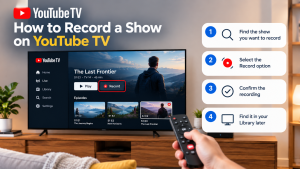

How to Record a Show on YouTube TV
How to Record a Show on YouTube TV Table of Contents Record a YouTube TV show by searching for a program’s title and selecting +
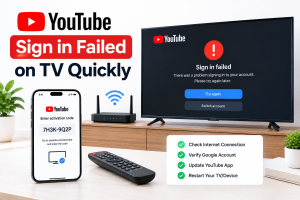
How to Fix YouTube Sign in Failed on TV Quickly
How to Fix YouTube Sign in Failed on TV Quickly Table of Contents If you can’t sign in to youtube on tv, unplug the TV