Navigating the Modern Live TV Streaming Crisis
Table of Contents
A major programming blackout recently kinda disrupted millions of households, when a high-stakes contract standoff basically made popular networks go completely dark. That high-profile youtube tv disney dispute left sports fans, news followers, and families suddenly searching for alternative ways to access critical live broadcasts. The main friction point was carriage fees, which are those monthly per-subscriber rates digital platforms pay to media networks for broadcast rights.
The entertainment giants pushed for higher fees, plus more digital integration to balance out declining cable revenues, while the streaming service pushed back on the hikes, trying to protect its baseline subscription pricing. This strategic summary is meant to cover the core disruption right away, giving readers a scannable breakdown of the money mechanics, the channel impacts, and the eventual multi-year resolution that got live programming restored back to subscribers.
Understanding the Recent Live Streaming Interruption
The modern television ecosystem relies on intricate distribution agreements that dictate which channels are available on specific platforms. When these financial contracts expire without a renewal, networks go dark on the youtvstart.com platform.
- The Core Issue: The central conflict during this specific disruption involved disagreements over carriage fees. These are the monthly per-subscriber rates that digital platforms pay to media conglomerates for the rights to broadcast their programming.
- The Financial Gap: Media networks demanded higher fees and broader inclusion of their standalone digital services within base subscription packages to offset declining traditional cable revenues.
- The Platform’s Stance: Conversely, the virtual multichannel video programming distributor (vMVPD) resisted these terms. They argued that accepting steep rate hikes would force a dramatic increase in the youtube tv cost for the end user, undermining the competitive advantage over traditional cable packages.
The Financial Mechanics of Content Carriage Disputes
Carriage disputes are fundamentally a battle over profit margins and consumer data control.
- Affiliate Fee Reliance: Media conglomerates rely heavily on affiliate fees to fund expensive broadcasting rights, particularly for live professional and collegiate sports.
- Recovering Lost Revenue: As consumers continue to cancel traditional pay-TV subscriptions, these entertainment giants look to digital streaming alternatives to recover lost revenue streams.
- Thin Margins: Digital streaming platforms operate on thin margins while trying to maintain stable, predictable pricing for their subscriber bases.
- The Dilemma: When a network demands premium rates for its entire portfolio, it forces the distributor into a difficult position. Accepting the terms leads to immediate price hikes for subscribers, while refusing the terms results in a major youtube tv outage that causes immediate consumer frustration and temporary subscriber churn.
Impact on Live Sports and Premium Entertainment
The immediate consequence of the channel blackout was felt most acutely by sports fans and television enthusiasts. Because the contract expiration occurred during a peak period of the sports calendar, viewers were abruptly cut off from high-profile football matchups, regional sports networks, and premium youtube tv add-ons.
Affected Sports Networks
- Premium Channels: The loss of sports coverage included the entire family of premium athletic networks.
- Collegiate Coverage: Viewers lost access to specialized collegiate networks like the SEC Network and ACC Network.
- Secondary Options: Secondary coverage options went dark, leaving millions unable to watch scheduled weekend games, live studio analysis, or vital primetime matchups.
Impact on Entertainment and News Channels
- Local Broadcast Outages: Beyond live sports, the blackout extended to major broadcast networks and popular entertainment channels.
- Major Media Markets: Local ABC affiliate stations went dark in major media markets, disrupting daily local news and national morning programs.
- Basic Cable Losses: Staple basic-cable brands specializing in scripted dramas, reality television, and educational documentaries were entirely inaccessible through the platform.
How the Contract Standoff Was Resolved
After roughly two weeks of pretty public haggling and a bit of service disruption, a thorough, multi year carriage agreement was finally put in place between the two corporations. This brought back, right away, all the blacked-out channels so subscribers could go back to watching normally, without having to tweak or change their subscription setups.
- Long term integration, basically, is where the compromise really landed. The finalized arrangement seemed to cover both the quick channel access need as well as the longer run digital integration path.
- On the confidential side, yes the precise numbers are still kept private, but the deal gives the streaming platform more latitude for how it can shape upcoming channel packages in the future.
- For consumers, the key point is that the arrangement locks in added future benefits. That includes built in access to upcoming direct to consumer sports streaming services, with no extra charge for base subscribers, and it signals a noticeable move toward hybrid distribution models.
Evaluating Alternatives During Live TV Outages
When major distribution networks go dark, television consumers frequently seek temporary or permanent alternatives to maintain access to live content. The market offers several distinct options, each with unique pricing structures and channel lineups.
- Competitor Live Streaming Services: Platforms such as Fubo, Hulu + Live TV, and Sling TV serve as direct replacements, offering comparable channel packages that include major sports and broadcast networks.
- Direct-to-Consumer Apps: Individual network apps allow viewers to subscribe directly to standalone services for a monthly fee, bypassing traditional and virtual television bundles entirely.
- Over-the-Air (OTA) Antennas: For local broadcast networks like ABC, CBS, NBC, and Fox, a standard digital antenna provides high-definition local programming completely free of monthly charges.The Evolving Future of Digital Cord-Cutting
The tension highlighted by this specific industry clash underscores a structural transition in how television content is financed and consumed. The initial promise of cord-cutting centered on cheap, highly customized alternatives to bloated cable bills. However, as digital platforms grow to match the scale of legacy cable providers, they face the exact same economic pressures that plagued traditional pay-TV for decades.
As programming costs escalate, virtual television providers must continuously re-evaluate their pricing structures. The trend indicates that the line between live TV streaming aggregators and individual direct-to-consumer applications will continue to blur, forcing consumers to navigate a fragmented marketplace where accessing a complete suite of sports and entertainment requires multiple subscriptions.
Conclusion
The high-stakes youtube tv disney dispute serves as a clear reminder of the volatile economics defining the modern digital entertainment era. While viewers ultimately regained full access to essential live sports, local news, and entertainment networks, the multi-week blackout exposed the ongoing friction between major content creators and digital distribution platforms. As the media landscape transitions further away from legacy models, these corporate standoffs will likely continue to shape consumer pricing, channel packaging, and the ultimate availability of live broadcast television.
For a deeper dive into how this carriage dispute initially disrupted the live streaming market, you can check out this coverage on the YouTube TV and Disney Contract Fight. This video breaks down the initial industry breakdown, the specific channels impacted, and what it meant for cord-cutters trying to watch live entertainment.
Frequently Asked Question
What caused the recent youtube tv disney dispute?
The disruption was caused by an inability to reach a mutually acceptable renewal agreement before the previous contract expired. The disagreement centered on carriage fees, with the network seeking higher distribution rates and the streaming service resisting hikes to protect its current baseline subscription pricing.
Which channels were temporarily unavailable during the blackout?
Subscribers lost access to more than a dozen networks, including local ABC stations, the entire family of ESPN channels, Disney Channel, Disney XD, Disney Junior, FX, FXX, FXM, Freeform, National Geographic, and National Geographic Wild.
Did subscription prices change because of the resolution?
The base monthly subscription price remained stable immediately following the settlement. The compromise focused on long-term distribution flexibility and packaging options rather than forcing an immediate, flat rate hike onto the consumer base.
Were subscribers credited for the period channels were missing?
zvzvzv
How long did the channel blackout actually last?
The contract impasse resulted in an active channel blackout that lasted for approximately two weeks before a formal, multi-year distribution agreement was finalized and channel feeds were restored.
Can local broadcast channels still be accessed when there is some kind of dispute?
Yes, local broadcast networks like ABC can usually be picked up without being inside a streaming subscription at all, by using a normal over the air digital antenna that plugs right into a television set, nothing fancy.
Is ESPN included in the current subscription plan, or not?
After the contract negotiations were successfully sorted out, the whole lineup of ESPN networks was brought back into the standard base package, and it was restored without asking for an extra add-on fee.
What is the actual difference between carriage fees and subscription fees?
Carriage fees are basically the wholesale prices a streaming service pays directly to a media network per subscriber, just for the permission to air those channels. Subscription fees are the monthly retail price— the monthly, consumer-facing cost that people pay to the streaming platform.
Will future direct-to-consumer apps be connected or folded into the service?
The new agreement has wording for future integration, so that when those next standalone premium sports apps launch, eligible subscribers get the access bundled in their existing service arrangement, not separately.
Do these types of disputes show up on other live streaming platforms too?
Yes, carriage disputes happen all across the television industry and they end up touching cable networks, satellite providers, and virtual streaming rivals as well, since companies keep negotiating content values and what is worth it.

Peter
Related Post

How to Watch the NFL Game Tonight: Complete Live Stream & Channel Guide
How to Watch the NFL Game Tonight: Complete Live Stream & Channel Guide Table of Contents TL;DR To figure out how to watch NFL game
Does YouTube TV Have Big Ten Network? Full Channel & Streaming Guide
Does YouTube TV Have Big Ten Network? Full Channel & Streaming Guide Table of Contents So does YouTube TV have the Big Ten Network? In
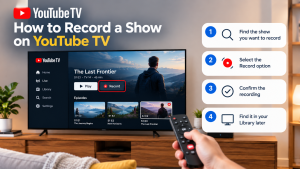

How to Record a Show on YouTube TV
How to Record a Show on YouTube TV Table of Contents Record a YouTube TV show by searching for a program’s title and selecting +